
Developmental Milestones: What to Watch For and How to Support Your Child
As a parent, watching your child grow and develop is one of life’s greatest joys. But, along with the excitement, comes the responsibility of ensuring your child is meeting key milestones in their growth. Developmental milestones are a set of functional skills or age-specific tasks that most children can do at a certain age. These milestones help gauge whether your child is developing at a healthy pace, or whether they may need extra support.
Understanding these milestones and knowing when to expect them can help you feel more confident in supporting your child’s development. As a paediatric chiropractic clinic, we are passionate about supporting families with the tools and resources they need to help their children thrive. Let's dive into the developmental milestones, how to track them, and how we can assist you in this important process.
Why Are Developmental Milestones Important?
Each child develops at their own pace, but there are certain milestones that most children reach by a certain age. These milestones are divided into four key areas:
Motor skills: Both fine motor (like picking up small objects) and gross motor (like crawling or walking).
Cognitive skills: How your child thinks, learns, and remembers.
Social and emotional development: How they interact with others and understand emotions.
Communication: The ability to understand and express language.
Tracking milestones helps identify potential developmental concerns early on. If a child is not reaching expected milestones, it may indicate areas where extra support or intervention is needed.
Key Developmental Milestones and When to Expect Them
While every child is unique and will develop at their own pace, here are the general milestones you can expect to see in the first few years of life:
By 2 Months
Motor Skills: Lifts head when on tummy.
Cognitive Skills: Focuses on objects and faces.
Communication: Begins to make cooing sounds.
Social and Emotional: Smiles in response to others.
By 4 Months
Motor Skills: Pushes down on legs when feet are on a hard surface.
Cognitive Skills: Begins to follow moving objects with eyes.
Communication: Starts to babble and makes sounds like “ooh” and “aah.”
Social and Emotional: Enjoys playing with people and may cry when playing stops.
By 6 Months
Motor Skills: Rolls over both ways, begins to sit without support.
Cognitive Skills: Explores with hands and mouth.
Communication: Responds to own name.
Social and Emotional: Shows interest in mirror images.
By 9 Months
Motor Skills: Sits well without support, crawls, pulls to stand.
Cognitive Skills: Understands object permanence (that objects continue to exist even when not seen).
Communication: Uses gestures, like waving bye-bye.
Social and Emotional: Has favourite toys or people.
By 12 Months
Motor Skills: Stands alone, may take a few steps and begin walking without holding on.
Cognitive Skills: Starts to understand simple words like “no” and “bye-bye.”
Communication: Says one or two words (like “mama” or “dada”).
Social and Emotional: May show fear of strangers.
By 18 Months
Motor Skills: Walks alone, may begin to run.
Cognitive Skills: Begins to follow simple directions (e.g., "give me the ball").
Communication: Says several single words, may begin to combine two words.
Social and Emotional: Shows fear in certain situations, begins to show signs of self-awareness.
By 2 Years
Motor Skills: Kicks a ball, climbs onto and off furniture without help.
Cognitive Skills: Starts to engage in pretend play (like feeding a doll).
Communication: Speaks in simple sentences, follows two-step instructions.
Social and Emotional: Shows more independence, begins to experience separation anxiety.
By 3 Years
Motor Skills: Runs easily, climbs well.
Cognitive Skills: Can name familiar objects and people, understands the concept of “mine” and “yours.”
Communication: Can talk in longer sentences, speaks clearly enough to be understood by others.
Social and Emotional: Shows more cooperative play with other children.
How to Track Developmental Milestones
Tracking developmental milestones can help you ensure your child is on the right path. It’s essential to keep an eye on key milestones, but also to recognise that children develop in their own time. Here are some simple ways to track progress:
Use a Milestone Tracker: Many parents find it helpful to use apps or printed milestone trackers to mark off key developments as their child reaches them. The CDC has an easy checklist which can be found here: https://www.cdc.gov/ncbddd/actearly/pdf/ltsae-checklist_compliant_30mcorrection_508.pdf
Observe Your Child’s Behaviour: Keep a mental note of their activities and changes in behaviour. If you notice any delays or concerns, make sure to bring them up with your healthcare provider.
Track Baby’s Growth and Development: Measuring your child’s weight, height, and head circumference is a good way to track overall growth.
How to Support Your Child’s Development
Supporting your child’s development is key to helping them meet their milestones. Here are some strategies to encourage healthy development:
Engage in Tummy Time: This is vital for developing neck, shoulder, and core strength. Start tummy time early to help your baby develop head control and the strength needed to eventually roll over, sit up, and crawl.
Promote Movement: Provide opportunities for your baby to explore their environment and develop motor skills. This can include:
Assisted Crawling: Gently guide your baby’s arms and legs in a crawling motion while they are on their tummy. This can help develop coordination and build strength.
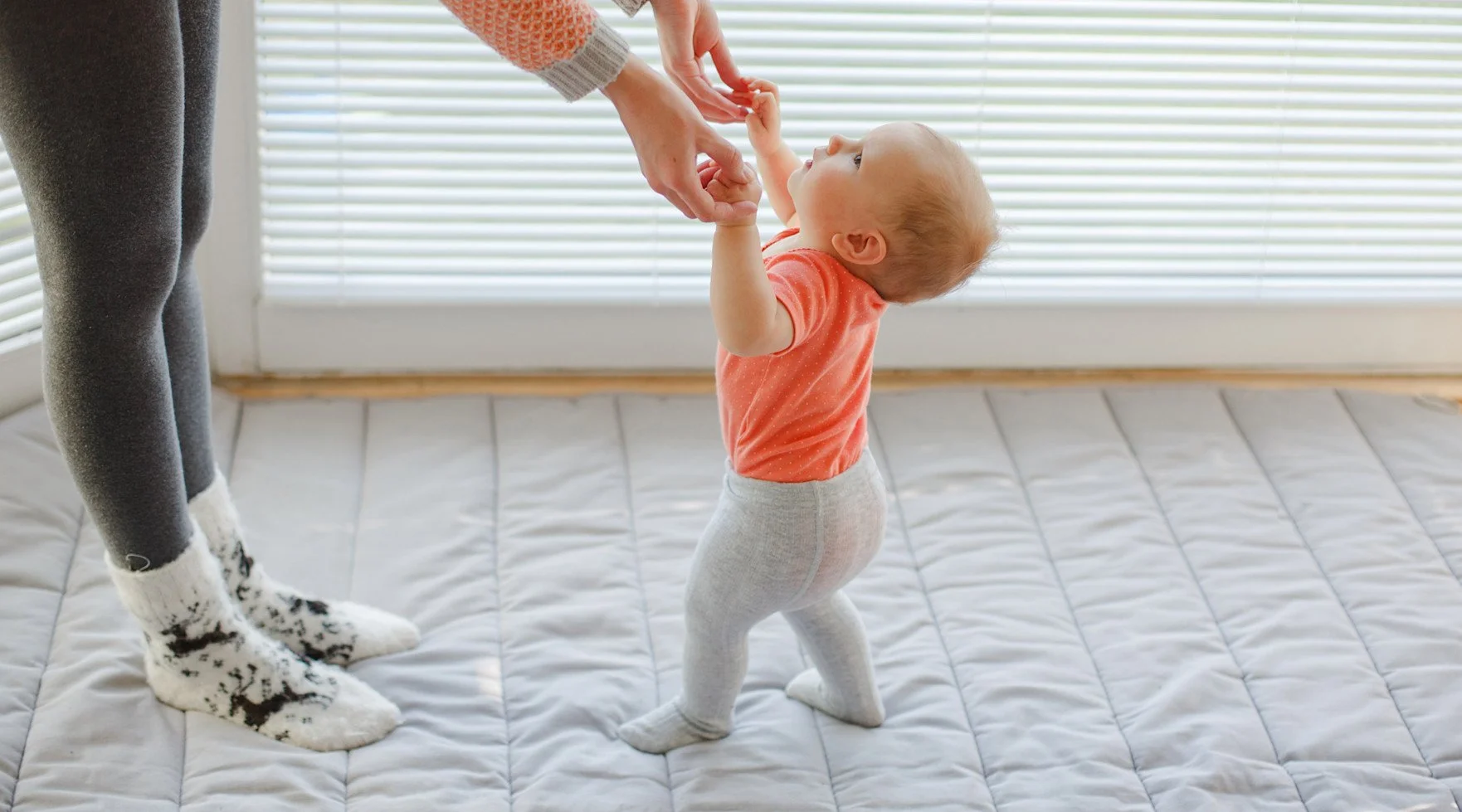
Practice Standing: Encourage your baby to pull up to stand by using furniture or holding onto your hands.
Interactive Play: Talk to your child, read to them, and encourage play that engages both their physical and cognitive skills.
Nutritional Support: A well-balanced diet is critical for healthy development. Make sure your child’s meals are rich in vitamins and minerals that support growth.
How Chiropractic Care Can Support Developmental Milestones
As parents, you want to do everything you can to support your child’s development. Chiropractic care can play an essential role in ensuring your baby’s body is functioning optimally as they grow. At Harrison Child & Family Clinic, our paediatric chiropractor can assess your child’s alignment and overall spinal health to ensure that they have the best possible start.
Spinal health plays a crucial role in the proper functioning of the nervous system, which directly affects motor skills, coordination, and overall development. Misalignments in the spine can sometimes interfere with how the nervous system communicates with the body. Regular chiropractic check-ups can help ensure proper alignment, allowing your child’s body to function optimally and supporting their growth in a holistic way.
How We Can Help
If you ever have concerns about your child’s developmental milestones or would like assistance in tracking them, our team is here for you. We can help you monitor growth, check alignment, and support your child’s development every step of the way. If you’d like to learn more about our services or schedule an appointment, feel free to get in touch - we’d love to hear from you!